
"I was lucky." Talking about the Holocaust with a G2 and her dad's video testimony.

Updated: Sep 1

I have the incredibly good fortune of calling Sue Tresatti my friend. Her dad, Norman Roth, was from Czechoslovakia. As a teenage boy, he survived persecution, a ghetto, two train rides, a death march, and the Auschwitz and Buchenwald camps.

For most of her life, Sue knew close to nothing about any of this as Norman didn’t talk about it. Her mom told her a couple things about what her dad went through, but not to any degree of detail. A fellow survivor that Norman met by chance later in life compelled Norman to be interviewed. Norman sent his video interview to Sue, with no advanced notice. She finally knew, and they were able to talk about it some before he died. Both of their stories are as remarkable as they are humbling and sometimes heartbreaking.

Sue let me track down her dad’s Holocaust journey. Fortunately, Yad Vashem had loads of material on her father’s hometown and what happened to the Jews from it. Coupled with photos from the US Holocaust Memorial Museum, along with a couple months’ worth of research, Sue and her family now know many details of what Norman went through and where and when, along with how all that fit into that vast machinery of darkness.

Until that investigation, I had not taken a deep dive into any one individual’s experiences in the Holocaust. Similar to the histories I do for US GI’s, you can’t help but get to know the person in question, even if just a little bit, and that familiarity makes this type of research very personal. Further, after studying the Holocaust mostly broadly, the power of one victim’s story impacted me deeply.
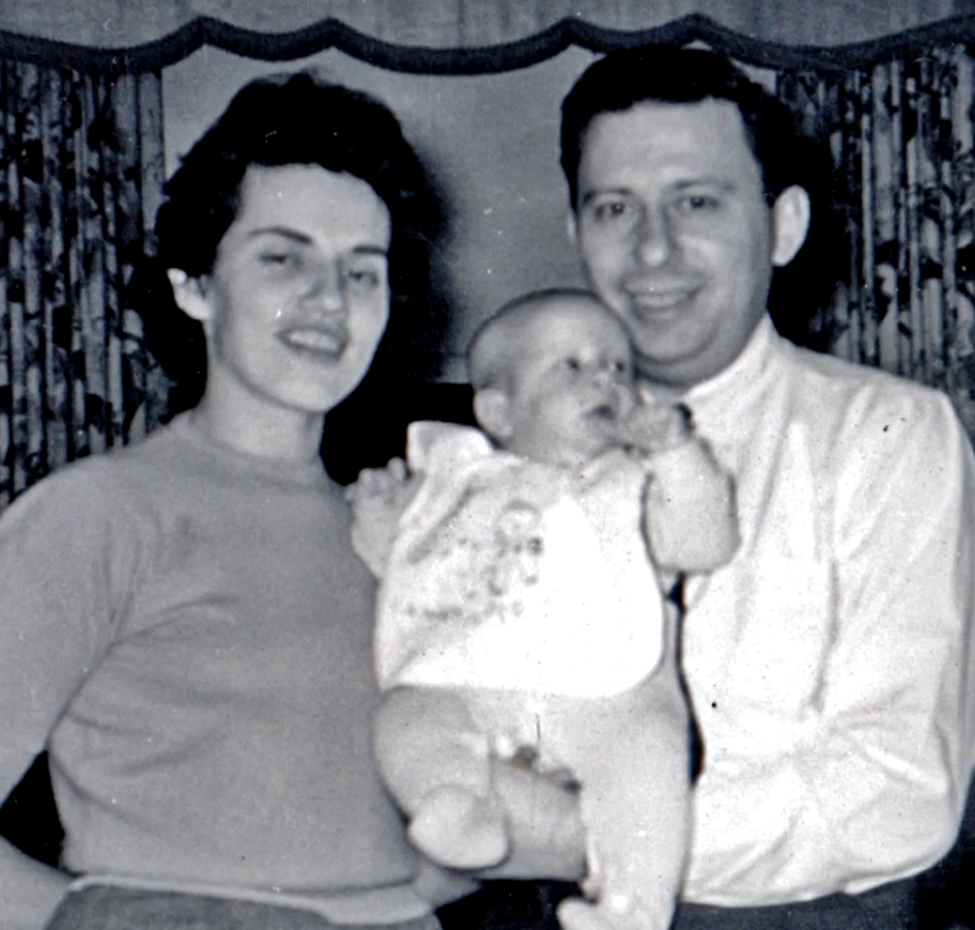
Sue gives talks about her dad in the Pittsburgh area frequently and has for the past several years. After she understood the specifics of what Norman went through, she decided that occasionally her talks could benefit from a historical perspective that I could provide. Our first joint talk was on June 9, 2026, at the Carnegie Free Library and Music Hall in Carnegie.

The talk was part history lesson, part testimony – both hers and her dad’s video – and part informal chat at the end. It was a good presentation. Over 100 people attended and one of my favorite comments about it from an attendee was ‘it is sad how many Norman Roths the Nazis deprived us of.’ You see, the point of the whole thing is not just about what Norman went through in Hungary, Czechoslovakia, Poland, and Germany. The point is how good of a man he was after all that, how he survived and later thrived, including how good of a daddy he was...an example of a good man of the highest caliber. Other generous comments included this one: 'Sue, your message helps us better understand man's inhumanity to man...and inspires us all to light our own little candle instead of merely cursing the darkness.'

I’m honored to have done this for Sue, and to be a supporting part of her dad’s story and hers. I’m just a historian. Sue is a G2 victim, and she allowed me to carefully inspect her dad’s story and then help her tell a wider part of it. This experience justified all the work I’ve done on the Holocaust so far, and this focus on the one will cement all similar work I do moving forward, both with Sue and on my own.

Sue and I hope to give these talks moving forward to anyone who will listen. We have one scheduled for the fall of 2026 in Beaver Falls, just outside of Pittsburgh (September 22, Carnegie Free Library of Beaver Falls). For those who can’t attend, please think about Norman and his family…and the other victims who survived and their families…and all the men and women and families who never were.

In his testimony, Norman repeatedly says “I was lucky.”
I am too.
Thank you, Sue, so much.

